
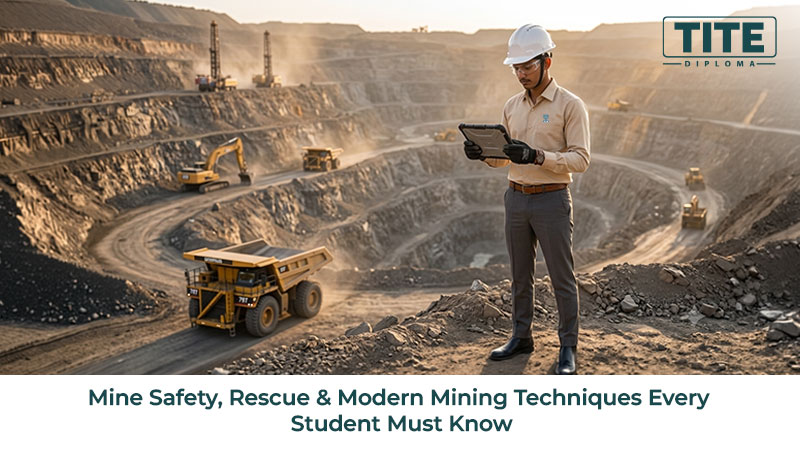
Mine Safety, Rescue & Modern Mining Techniques Every Student Must Know
Summary: Mining is one of the most challenging industries, making safety knowledge and modern techniques essential for every aspiring professional. This article explores key mine safety practices, rescue operations, advanced mining technologies and the skills students need to work efficiently and responsibly. It also highlights how staying updated with industry standards prepares students for successful careers in the evolving mining sector.
Mining is one of the foundational industries that supports infrastructure, manufacturing, power generation, and economic growth by supplying essential minerals and raw materials. As global demand for these resources continues to rise, the need for skilled mining professionals has become more significant than ever. Students pursuing technical education at Diploma in mining engineering colleges in Odisha gain the knowledge and practical skills required to contribute to safe, efficient, and sustainable mining operations while meeting the evolving needs of the industry.
Modern mining is no longer limited to extracting minerals from the earth, it has evolved into a technology-driven sector that prioritizes worker safety, environmental responsibility, risk management and operational efficiency. Advanced equipment, digital monitoring systems and well-planned rescue mechanisms are now integral parts of mining operations. Institutions like TITE Diploma prepare students with industry-relevant training that combines technical expertise, safety practices and hands-on experience, helping them build successful careers in today's rapidly transforming mining sector.
Why Mine Safety Matters?
Mining is one of the most demanding industries, where workers operate in challenging environments that require strict adherence to safety protocols. Underground and surface mines present numerous hazards, including cave-ins, gas leaks, explosions caused by methane, coal and silica dust exposure, fires, equipment malfunctions, electrical accidents and poor ventilation. Without proper planning and safety measures, these risks can lead to severe injuries, occupational diseases, environmental damage and even loss of life. This is why students enrolled in Mining engineering diploma colleges in Bhubaneswar are trained to identify workplace hazards, follow standard operating procedures and use modern safety equipment effectively.
Unsafe mining practices affect far more than individual workers. Accidents can have devastating consequences for families, disrupt mining operations, increase financial losses, delay production schedules and damage a company's reputation. Recovering from major incidents often requires significant time and resources, making prevention far more effective than response. As a result, mine safety is not only a legal requirement enforced through mining regulations and workplace safety standards but also an ethical responsibility shared by mining companies, engineers, supervisors and workers. Building a strong safety culture ensures that every employee returns home safely while improving productivity, operational efficiency and long-term sustainability across the mining industry.
Essential Mine Safety Measures
Ensuring safety in mining requires a combination of advanced technology, well-defined procedures and a workforce that is properly trained to identify and manage risks. Students studying at the Best mining diploma colleges in Odisha learn that accident prevention begins with following standard safety practices consistently, as even small lapses can lead to serious consequences.
Personal Protective Equipment (PPE)
Personal protective equipment is the first line of defense against workplace hazards. Every miner should wear a safety helmet, protective eyewear, gloves, steel-toe boots, reflective clothing, hearing protection and respiratory masks whenever required. Proper use and regular inspection of PPE significantly reduce the risk of injuries caused by falling objects, dust exposure, noise and flying debris.
Ventilation Systems
Adequate ventilation is essential, particularly in underground mines where harmful gases and dust can accumulate. Modern ventilation systems continuously circulate fresh air while removing methane, carbon monoxide, diesel exhaust and airborne contaminants. Effective airflow helps maintain safe oxygen levels and creates a healthier working environment.
Gas Monitoring and Dust Control
Continuous gas monitoring systems detect hazardous gases before they reach dangerous concentrations, allowing immediate corrective action. Dust control measures such as water spraying, dust collectors and ventilation reduce exposure to coal and silica dust, helping prevent occupational diseases like pneumoconiosis and silicosis while improving visibility underground.
Safe Blasting Practices
Blasting operations must be carefully planned and executed by trained personnel. Proper explosive handling, controlled blast design, secure evacuation procedures and post-blast inspections minimize risks to workers and surrounding infrastructure. Following approved blasting protocols also improves operational efficiency and reduces unnecessary ground vibrations.
Machinery Maintenance and Operator Training
Mining equipment operates under extreme conditions and requires regular inspection and preventive maintenance to avoid unexpected failures. Operators should receive comprehensive training on equipment handling, safety features, emergency shutdown procedures and routine inspections. Well-maintained machinery not only enhances safety but also improves productivity and extends equipment life.
Emergency Communication Systems
Reliable communication is vital during both routine operations and emergencies. Modern mines use wireless communication networks, tracking systems, alarms, and control centers to maintain constant contact with workers. Quick communication enables faster decision-making, coordinated evacuations and efficient rescue operations when incidents occur.
Regular Safety Drills and Inspections
Routine safety drills prepare workers to respond calmly and effectively during emergencies such as fires, gas leaks or mine collapses. Regular workplace inspections help identify potential hazards before they become serious threats, ensuring that safety equipment, escape routes, machinery and operational procedures remain compliant with industry regulations. Continuous training, audits and inspections foster a strong safety culture that protects both workers and mining operations.
Mine Rescue: What It Means?
Mine rescue refers to the specialized process of locating, assisting, and safely evacuating workers who are trapped, injured, or exposed to hazardous conditions during a mining emergency. Its primary purpose is to protect human life, minimize injuries, and restore safe mining operations as quickly as possible. Students pursuing technical education at Diploma in mining engineering colleges in Odisha learn that effective rescue planning is a critical component of mine safety and is supported by proper training, advanced equipment, and well-defined emergency procedures.
Rescue operations become necessary during emergencies such as mine collapses, fires, explosions, gas leaks, flooding, equipment failures or other incidents that threaten the safety of miners. In such situations, every minute is crucial, as hazardous conditions can rapidly worsen and reduce the chances of survival. A well-prepared emergency response system ensures that rescue efforts begin immediately while maintaining the safety of both the victims and the rescuers.
Specially trained mine rescue teams play a vital role in managing these emergencies in both underground and surface mines. They are skilled in search and rescue techniques, first aid, firefighting, hazardous gas detection, confined-space operations and the use of specialized breathing apparatus and rescue equipment. These teams also assess risks, establish safe evacuation routes, communicate with control centers, and coordinate with medical personnel to ensure efficient and organized rescue operations.
A rapid and well-coordinated response can make the difference between life and death during a mining accident. Early detection of hazards, immediate communication, and swift deployment of rescue teams help reduce injuries, prevent secondary accidents, and improve the chances of saving lives. This is why mining companies invest heavily in emergency preparedness, regular rescue drills, and continuous training to ensure they can respond effectively whenever an unexpected situation arises.
Steps in a Mine Rescue Operation
A successful mine rescue operation follows a well-defined sequence of actions to ensure the safety of both the affected workers and the rescue personnel. Every step is carefully planned to minimize risks, improve coordination and maximize the chances of saving lives.
Assess the Emergency
The first step is to determine the nature and severity of the incident. Rescue coordinators gather information about the type of accident, the number of people involved, the location and potential hazards such as fire, flooding, gas leaks or mine collapse. This assessment helps determine the resources and rescue strategies required.
Secure the Command Center
An emergency command center is established to coordinate all rescue activities. This control center manages communication between rescue teams, mine management, medical services and emergency authorities. Clear leadership and real-time information sharing ensure that every team member works according to a unified rescue plan.
Locate Trapped or Injured Miners
Using worker tracking systems, digital mine maps, communication devices and search equipment, rescue teams identify the location of trapped or injured miners. Modern technologies such as thermal imaging cameras, drones and robotic systems may also be used to search areas that are difficult or unsafe for rescuers to enter.
Check Air Quality and Structural Stability
Before entering affected areas, rescue personnel carefully evaluate the environment. Gas detectors measure oxygen levels and identify the presence of hazardous gases such as methane or carbon monoxide, while engineers assess the structural stability of tunnels and mine passages. This step prevents additional accidents and ensures rescue teams can operate safely.
Evacuate Safely
Once the area is declared safe, rescuers carefully evacuate trapped or injured workers using designated escape routes and specialized rescue equipment. If conditions remain hazardous, controlled evacuation procedures are followed to protect both victims and rescue personnel from further harm.
Provide First Aid and Medical Support
Immediately after evacuation, injured miners receive emergency medical attention. Rescue teams administer first aid, stabilize fractures, control bleeding, provide oxygen if needed and monitor vital signs before transferring victims to hospitals or specialized medical facilities for further treatment.
Review and Document the Rescue Process
After the emergency has been resolved, a detailed review of the rescue operation is conducted. Teams document the sequence of events, evaluate the effectiveness of rescue procedures, identify areas for improvement and recommend corrective actions. These findings help strengthen future emergency preparedness, improve safety protocols and reduce the likelihood of similar incidents occurring again.
Modern Mining Techniques
The mining industry has undergone a major technological transformation over the past decade. Modern mining techniques focus not only on increasing mineral production but also on improving worker safety, operational efficiency and environmental sustainability. By integrating advanced machinery, automation and digital technologies, mining companies can reduce risks, lower operational costs and make better decisions throughout the mining process.
Mechanized Mining
Mechanized mining replaces labor-intensive manual operations with heavy machinery such as continuous miners, hydraulic excavators, loaders, conveyors and drilling rigs. These machines increase productivity, reduce physical strain on workers and improve the precision of mining activities while maintaining higher safety standards.
Automated Drilling and Hauling
Automation has significantly improved drilling and material transportation in mines. Automated drilling systems create accurate blast holes with minimal human intervention, while autonomous haul trucks transport ore and waste materials along predefined routes using GPS and onboard sensors. These systems enhance productivity, reduce fuel consumption and minimize human exposure to hazardous environments.
Remote-Controlled Equipment
Remote-operated mining equipment allows operators to control machinery from a safe distance, particularly in unstable underground areas or locations with high temperatures, toxic gases or the risk of rock falls. Remote-controlled loaders, drilling machines and excavation equipment improve worker safety while ensuring uninterrupted operations in dangerous zones.
Sensor-Based Monitoring
Modern mines are equipped with networks of sensors that continuously monitor critical conditions such as gas concentrations, air quality, ground movement, temperature, humidity, equipment health and vibration levels. Real-time monitoring enables early detection of potential hazards, allowing mining companies to take preventive action before incidents occur.
Data-Driven Mine Planning
Advanced software and digital modeling tools enable engineers to analyze geological data, estimate mineral reserves, optimize mine layouts and plan excavation sequences more accurately. Data-driven mine planning helps maximize resource recovery, reduce operational costs, improve equipment utilization and minimize environmental impact throughout the life of the mine.
Use of AI, Drones and Robotics in Mining Operations
AI, drones and robotics are reshaping modern mining practices. AI-powered systems analyze vast amounts of operational data to predict equipment failures, optimize production schedules and improve safety management. Drones are widely used for aerial surveying, stockpile measurement, environmental monitoring and inspection of difficult-to-access areas. Robotic systems perform hazardous tasks such as underground inspections, exploration and rescue support, reducing human exposure to dangerous conditions while increasing the accuracy and efficiency of mining operations. Together, these technologies are driving the mining industry toward safer, smarter and more sustainable operations.
Skills Students Should Learn
A successful career in mining requires more than technical knowledge. Today's mining professionals must combine engineering skills with safety awareness, technological expertise, environmental responsibility and strong teamwork. Students studying at Mining engineering diploma colleges in Bhubaneswar are encouraged to develop these essential competencies to meet the evolving demands of the modern mining industry.
Basic Mine Safety Rules
Every mining student should have a thorough understanding of fundamental safety practices, including hazard identification, proper use of PPE, safe handling of machinery, emergency evacuation procedures and adherence to workplace safety protocols. A strong safety mindset helps prevent accidents and creates a secure working environment for everyone.
Importance of Emergency Response
Knowing how to react during emergencies is a critical skill for every mining professional. Students should learn emergency response procedures, basic first aid, fire safety, rescue coordination and communication protocols. Quick thinking and proper training can significantly reduce injuries and save lives during unexpected incidents.
Role of Technology in Mining
Modern mining relies heavily on advanced technologies such as automation, AI, drones, robotics, GPS-based equipment, digital mine mapping and sensor-based monitoring systems. Students should develop digital literacy and understand how these technologies improve productivity, enhance worker safety and support data-driven decision-making in mining operations.
Environmental Responsibility
Sustainable mining practices are becoming increasingly important across the industry. Students should understand responsible resource extraction, waste management, land reclamation, pollution control, water conservation and environmental regulations. Balancing mineral production with environmental protection is essential for the long-term sustainability of mining projects.
Teamwork, Discipline and Compliance with Safety Standards
Mining operations involve close coordination between engineers, technicians, machine operators, supervisors and rescue teams. Effective communication, teamwork, discipline and strict compliance with safety standards are vital for maintaining efficient operations and preventing workplace accidents. Developing these professional qualities enables students to work confidently in challenging environments while contributing to a strong safety culture and organizational success.
Mining continues to evolve with advancements in safety standards, rescue preparedness and smart technologies that make operations more efficient and secure. For aspiring mining professionals, understanding these aspects is just as important as learning extraction techniques, as they form the foundation of a successful and responsible career. A Diploma in Mining Engineering equips students with practical skills, industry knowledge and hands-on training to meet the demands of today's mining sector. If you're ready to build a career in this field, you can submit your online application and take the first step toward a rewarding future in mining engineering.
-

-

-
.jpg) Mining Engineering Diploma Course With Practical Field Training August 21, 2026
Mining Engineering Diploma Course With Practical Field Training August 21, 2026 -

-